Many new perfume founders struggle with one simple question. What bottle size should I choose? A wrong size can slow sales and waste money.
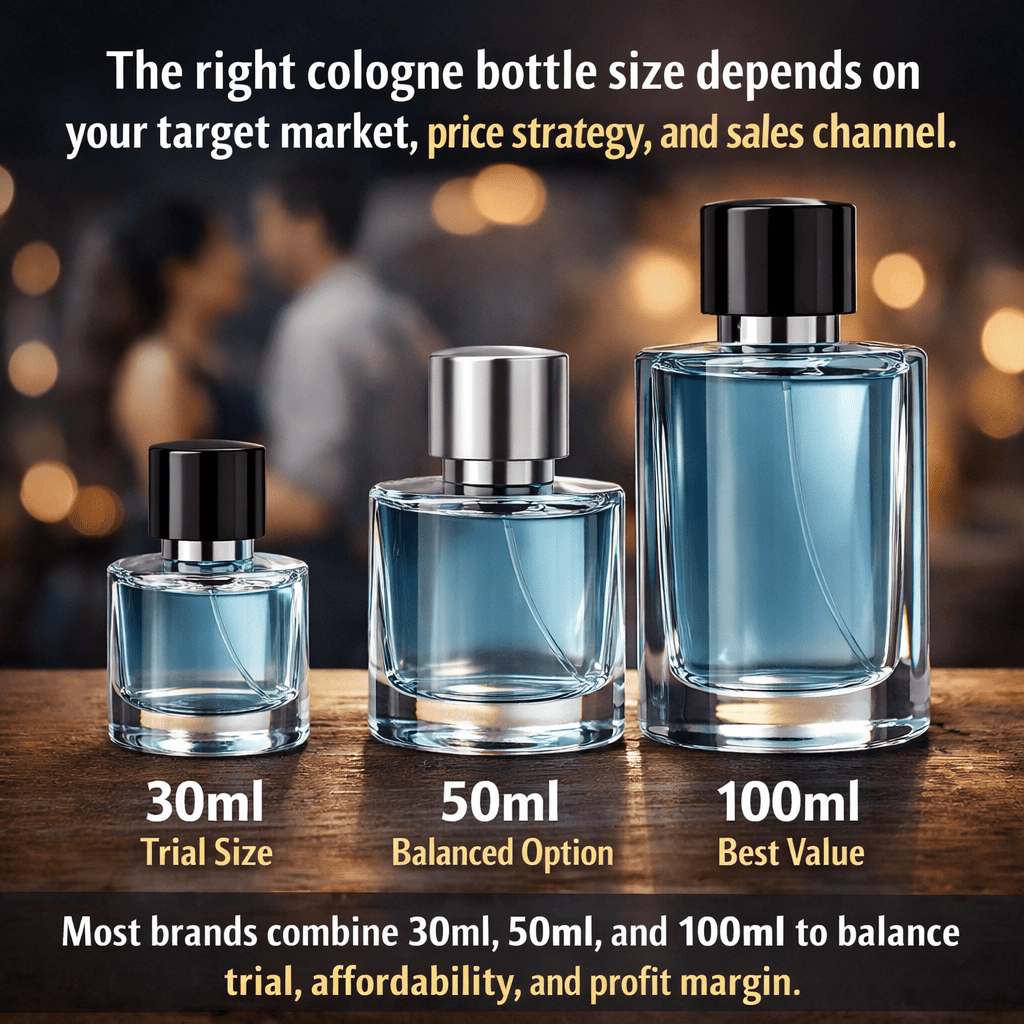
The right cologne bottle size depends on your target market, price strategy, and sales channel. Most brands combine 30ml, 50ml, and 100ml to balance trial, affordability, and profit margin.
When I work with new perfume founders, I always start with bottle size before design. Size affects cost, shipping, price, and even brand image. Now I will break it down clearly.
Why Do Different Cologne Bottle Sizes Matter So Much?
Choosing the wrong size can increase inventory pressure. It can also confuse your pricing. Many founders only focus on design and forget that size shapes customer behavior.
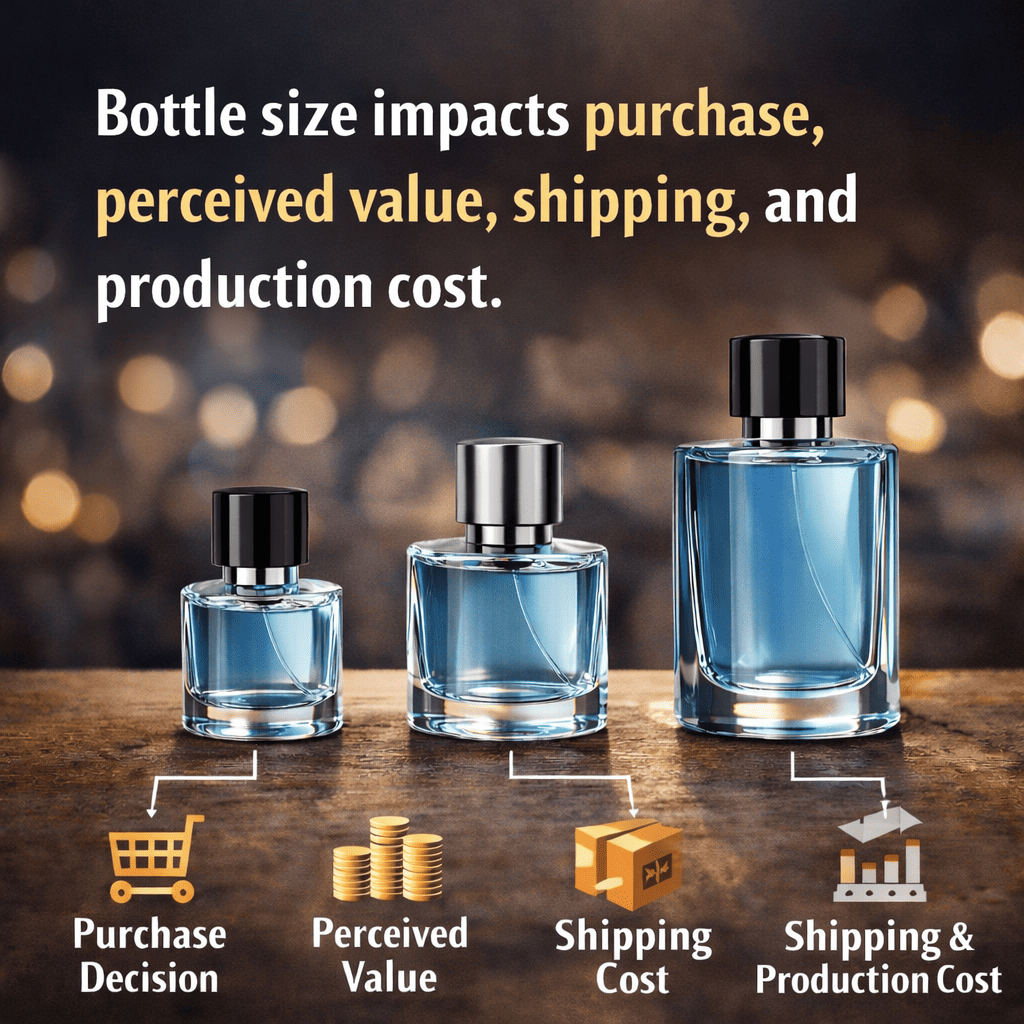
Bottle size matters because it directly affects customer purchase decision, perceived value, shipping cost, and your production investment.
Understanding Size From a Business Perspective
I always tell my clients that bottle size is not just about volume. It is about positioning.
1. Customer Psychology
Customers do not buy milliliters. They buy feelings and value.
| Bottle Size | Customer Feeling | Buying Motivation | Risk Level |
|---|---|---|---|
| 10ml–15ml | Safe trial | Testing scent | Very Low |
| 30ml | Affordable | Entry luxury | Low |
| 50ml | Standard choice | Balanced value | Medium |
| 100ml | Premium deal | Long-term use | Higher |
When I serve Southeast Asian e-commerce brands, I see many young consumers prefer 30ml. They want variety. They like to try different scents. They also have budget limits.
2. Cost Structure Impact
Bottle size affects:
- Glass weight
- Carton size
- Shipping cost
- Filling cost
- MOQ from suppliers
For example, 100ml bottles usually cost only slightly more than 50ml in packaging. But the retail price difference is large. That increases your margin.
But if you are a new brand, 100ml may increase your stock risk.
3. Sales Channel Strategy
Online stores perform differently from offline boutiques.
- E-commerce → 30ml and 50ml sell faster
- Duty-free or department stores → 100ml performs better
- Subscription or discovery kits → 10ml–15ml
I have helped brands adjust their size mix after launch. Many started with only 100ml. Later they added 30ml and sales improved quickly.
What Are the Most Popular Cologne Bottle Sizes in the Market?
Some founders want to be unique. But market data still matters. There are reasons why certain sizes dominate the industry.
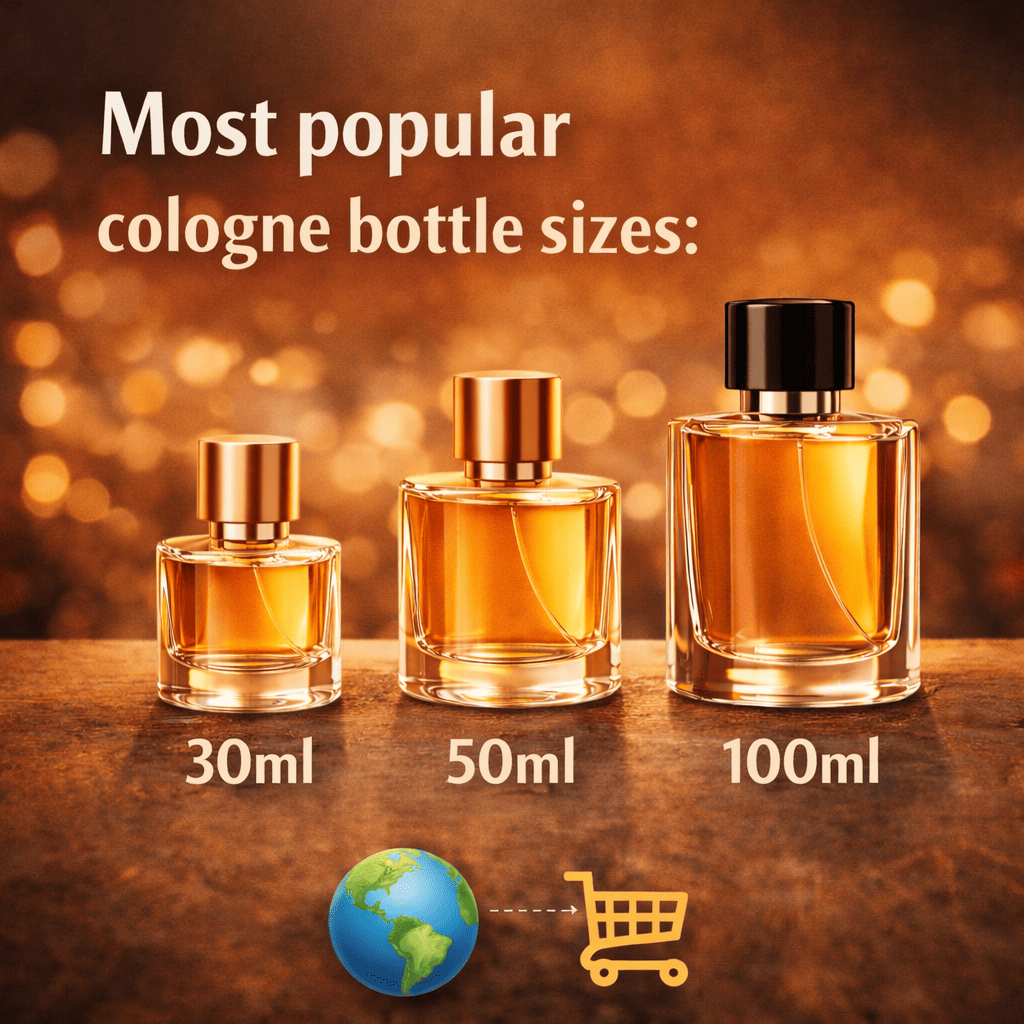
The most popular cologne bottle sizes are 30ml, 50ml, and 100ml because they fit global retail standards and consumer expectations.
Breaking Down Each Standard Size
30ml – The Smart Entry Size
I personally like 30ml for new brands.
Why?
- Lower retail price
- Lower production risk
- Easier for first-time buyers
- Good for online ads conversion
For DTC brands in emerging markets, 30ml works very well. It allows customers to try without heavy commitment.
But the unit packaging cost ratio is higher. The glass cost is not half of 60ml. So margin must be calculated carefully.
50ml – The Balanced Option
50ml is the global middle ground.
| Advantage | Explanation |
|---|---|
| Market Standard | Customers are familiar with it |
| Good Value | Perceived as reasonable size |
| Stable Margin | Cost structure is efficient |
| Good Shelf Look | Not too small, not too big |
If a founder asks me to recommend only one size, I usually say 50ml.
It gives flexibility. It fits most price segments.
100ml – The Profit Driver
Many big brands push 100ml heavily.
Why?
- Better margin per unit
- Strong value perception
- Lower packaging cost ratio
But 100ml needs strong branding. Customers must trust your scent before committing.
If you are building storytelling and strong positioning, 100ml works well.
How Should Small Perfume Brands Decide Their Bottle Size Strategy?
Small brands cannot copy big luxury houses directly. You need a practical approach.
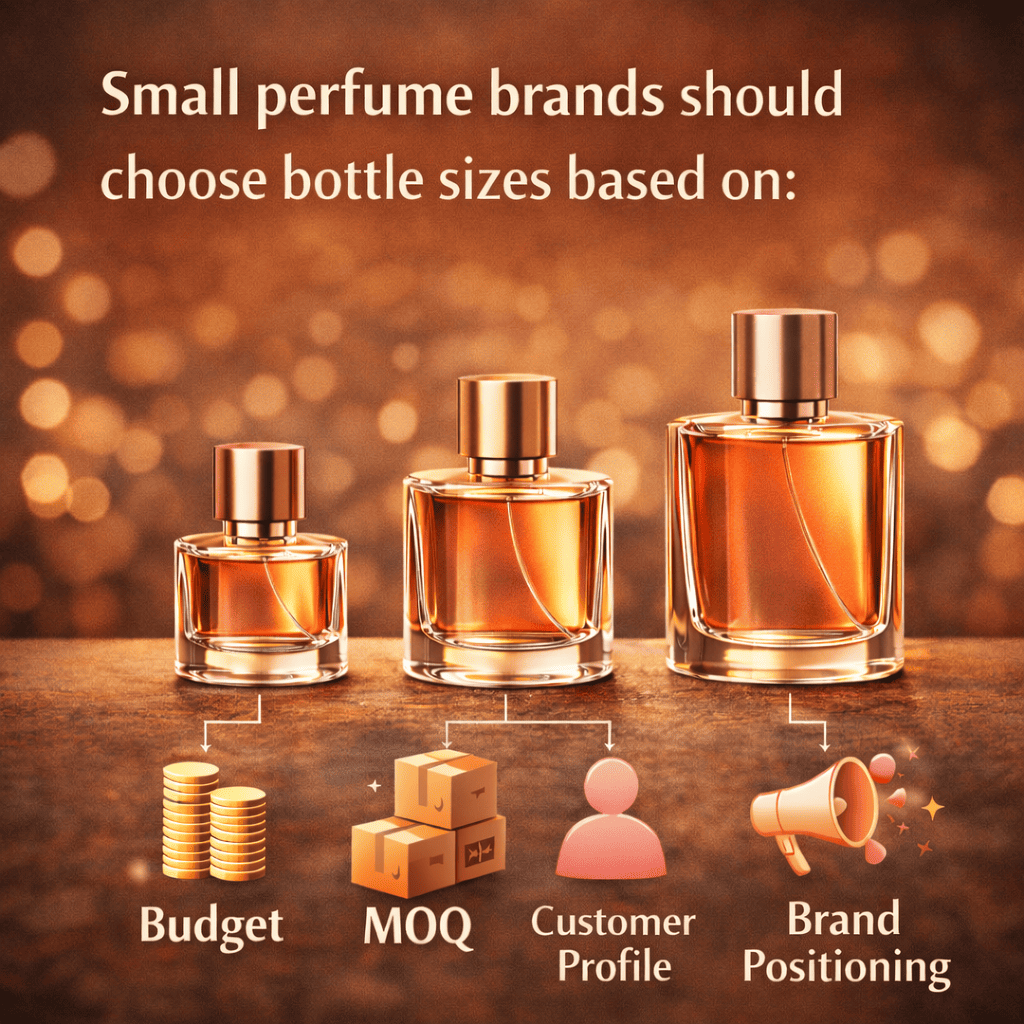
Small perfume brands should choose bottle sizes based on budget, minimum order quantity, customer profile, and brand positioning.
My Practical Framework for Choosing Bottle Sizes
When I consult clients, I follow a simple structure.
Step 1: Define Your Core Customer
Ask yourself:
- What is their monthly income?
- Do they collect perfumes?
- Do they buy online?
- Are they new to niche fragrances?
Young online customers prefer smaller sizes. Mature customers prefer value sizes.
I want to share a real example from the Thai market. The local perfume brand :contentReference[oaicite:0]{index=0} displays many 10ml perfume bottles in their retail stores. They offer different scents in small 10ml packaging. Customers can test various fragrances easily. They can smell them in store. If they like a scent, they can start with a 10ml bottle. It is easy to carry. It feels safe to buy.
After that, customers can upgrade to 50ml, 60ml, or even 100ml sizes. This structure creates a clear purchase path. First trial. Then daily use. Then long-term commitment.
I believe this strategy works very well for emerging markets and young brands. It reduces customer hesitation. It also increases the chance of repeat purchase.
Step 2: Check Your Budget and MOQ
As a glass bottle supplier, I know MOQ matters.
- Custom mold → Higher initial investment
- Stock bottle → Lower MOQ, lower risk
- Decoration like spray coating, frosting, hot stamping → Adds cost
If you are testing the market, I recommend starting with 10ml, 30ml, or 50ml instead of jumping directly to 100ml. Small sizes allow you to test fragrance popularity. You can observe sales data. You can collect customer feedback.
If one scent sells better, you can then develop larger sizes for that SKU.
This step protects your cash flow. It also prevents overstock of slow-moving fragrances.
Step 3: Plan Your Size Mix Strategy
You do not need only one size.
Here is a common strategy I recommend for startup perfume brands:
| Brand Stage | Suggested Sizes |
|---|---|
| Testing Phase | 10ml + 30ml |
| Launch Phase | 30ml only |
| Growth Phase | 30ml + 50ml |
| Expansion Phase | 30ml + 50ml + 100ml |
When you are in the very early stage, you do not know how the market will respond. So I suggest trying 10ml for sampling and easy trial. At the same time, you can offer 30ml as your core retail product.
Later, when you see stable sales and positive reviews, you can introduce 50ml as the standard option. After brand trust is stronger, 100ml becomes your profit driver.
This gradual approach gives you flexibility. It allows you to adjust production volume based on real demand.
Step 4: Think About Logistics
Heavy glass increases shipping cost. For cross-border e-commerce, this matters a lot.
For Southeast Asia markets, shipping sensitivity is high. Smaller bottles reduce final checkout price impact. A 10ml or 30ml bottle is lighter. It is easier to ship. It also reduces risk of damage.
If you sell through TikTok shop, Shopee, or Lazada, small sizes often convert better because the total price looks affordable.
Step 5: Consider Customization Possibility
At Hongyan Glass Bottle, I offer:
- Over 500 ready stock perfume bottles
- Spray coating
- Frosted finish
- Gold plating
- Decal decoration
- 3D sampling for new designs
If you are not ready for full custom mold, stock solutions can still look premium.
You can launch with 10ml, 30ml, or 50ml stock bottles. You can use simple decoration at first. After your fragrance becomes popular, you can invest in exclusive molds.
I always tell founders that packaging should grow with your brand. You do not need to build everything at once. You need to survive first. Then you scale.
Conclusion
Start small. Test with 10ml and 30ml. Adjust with market feedback. Then expand to 50ml and 100ml when demand is clear.