
I see many perfume brands choose bottle size too early, and later they find that the bottle does not fit the market.
I pick the right cologne bottle size by matching the bottle to the job. I use small sizes for testing and promotion, medium sizes for core sales, and larger sizes for loyal buyers who want stronger value and a fuller brand experience.
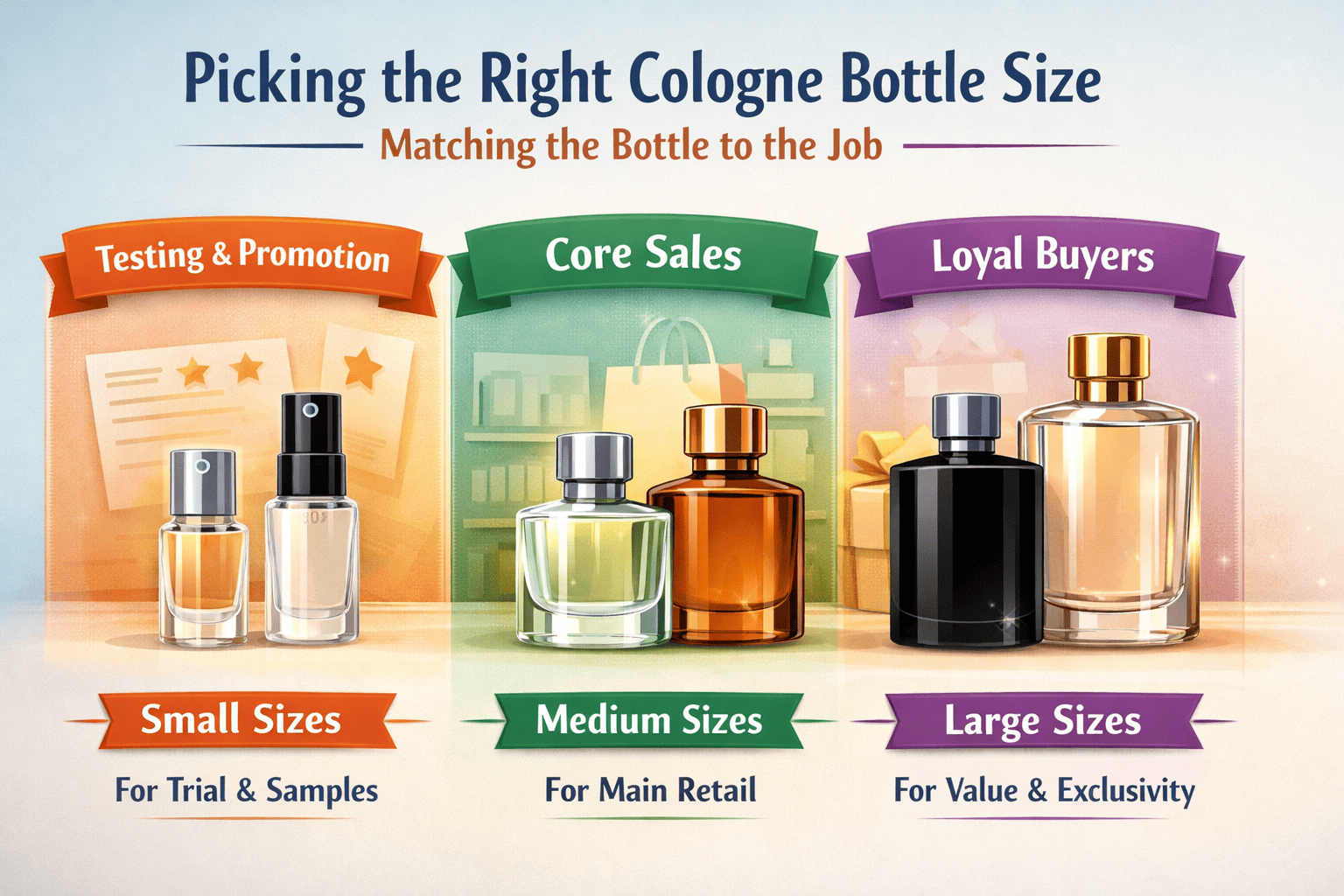
When I build a perfume line, I do not see bottle size as a small design detail. I see it as part of the whole sales plan. A good size affects the retail price, the customer decision, the gift value, the travel use, and even how the perfume looks in photos. A wrong size can make a perfume feel expensive, hard to try, or less practical than it should be.
What Bottle Sizes Do I Usually See in the Perfume Market?
I can make the product plan too narrow if I only think about 30ml, 50ml, and 100ml.
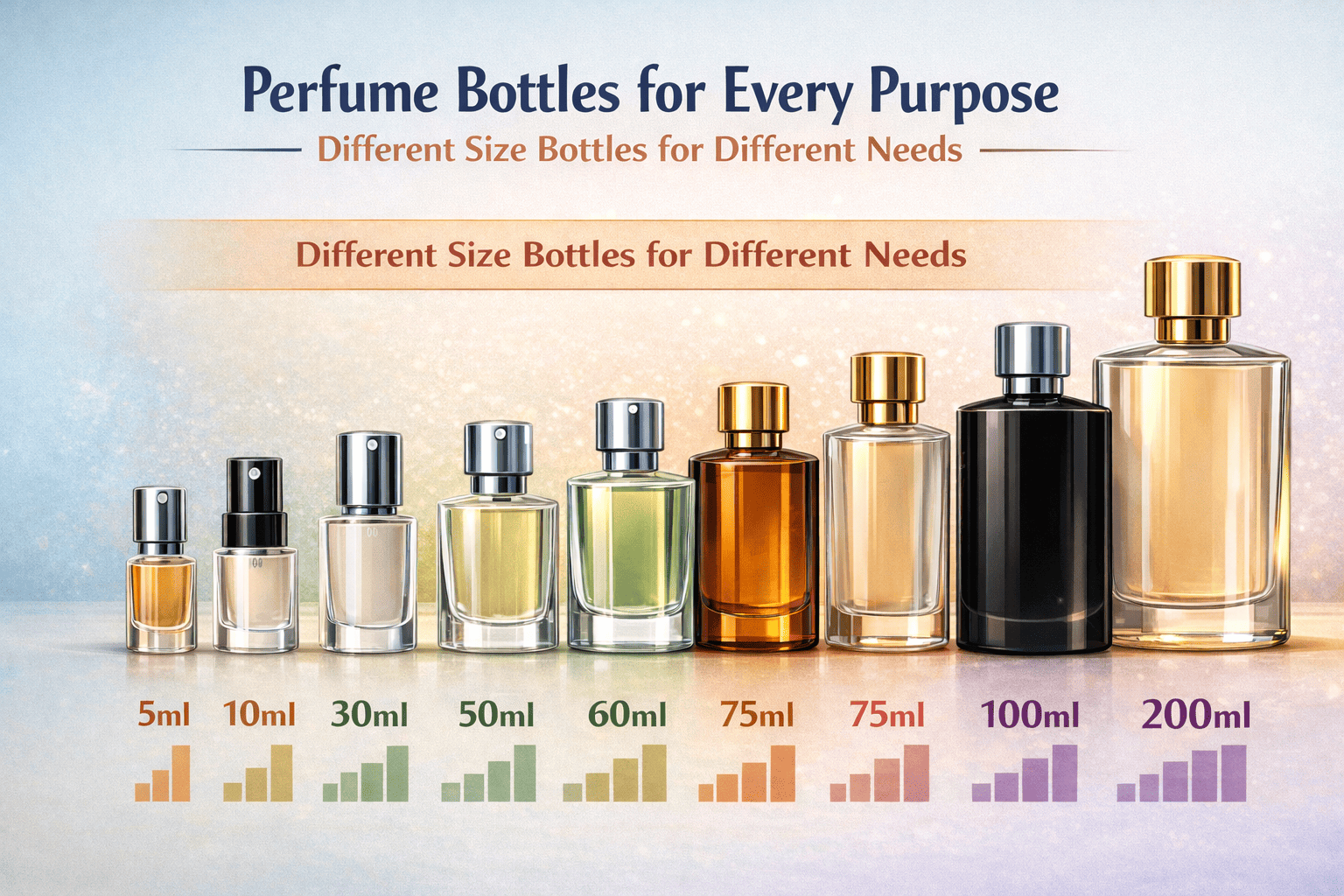
I often work with 5ml, 10ml, 30ml, 50ml, 60ml, 75ml, 100ml, 125ml, and even 200ml perfume bottles. I do not use all of them in one launch, but I do think each size has its own purpose in the product line.
Why I do not limit my size plan to only the standard options
Many people talk about perfume sizes as if the market only uses 30ml, 50ml, and 100ml. These are still very common, and they are easy for customers to understand. But in real packaging work, I often use more than these standard sizes. Besides the regular options, we also often use 60ml, 75ml, 125ml, and even larger 200ml perfume bottles.
For me, 60ml is a useful middle choice. It gives a little more product than 50ml, but it does not feel too large or too expensive. A 75ml bottle often feels elegant and premium. It has stronger presence than 50ml, but it still feels easy to hold and easy to sell. A 125ml bottle is good when I want to give the customer a better value message. A 200ml bottle is a different kind of product. I usually see it as a statement size. It can work for signature scents, gift collections, or customers who already love the fragrance and want a long-term bottle at home.
This is why I do not think the right size is always the most common one. I think the right size is the one that fits the product role. If I want a clean and safe first launch, I may still start with 50ml or 75ml. If I want to create a stronger value feeling, 125ml can help. If I want to create a bold product with strong visual impact, 200ml can make sense. But I do not add these sizes just because they exist. I add them when they support the sales logic of the brand.
How I compare these size options
| Size | Main Use | What I Like | What I Need to Watch |
|---|---|---|---|
| 5ml | Trial, discovery, gifting | Very low buying risk | Small branding space |
| 10ml | Travel, daily carry, paid trial | Easy to carry and easy to sell | Unit cost can feel high |
| 30ml | Entry full-size bottle | Lower retail barrier | Smaller shelf presence |
| 50ml | Core retail size | Good balance of price and premium feel | Needs clear pricing |
| 60ml | Slight upgrade from 50ml | More product without a big jump | Needs a strong reason in the line |
| 75ml | Premium core size | Elegant and substantial | Less standard in some markets |
| 100ml | Classic value size | Strong cost-per-ml story | Higher first purchase barrier |
| 125ml | Bigger value offer | Stronger abundance feeling | Higher stock pressure |
| 200ml | Statement or loyal user size | Strong shelf impact and value | Weight, cost, and slower first conversion |
How I choose the hero size
I do not ask which size looks best in a drawing. I ask which size makes the product easier to sell. If the brand is new, I usually like 50ml, 60ml, or 75ml as the [[hero size]][1]. These sizes feel premium, but they are still easier for new customers to accept than a very large bottle. If the scent already has loyal buyers, I can add 125ml or 200ml later. For me, this step-by-step logic keeps the product line simple and healthy.
Why Do Small Bottles, Samples, and Gift Sets Matter So Much?
I often see brands focus only on the main bottle, but the first sale usually depends on the smaller formats.
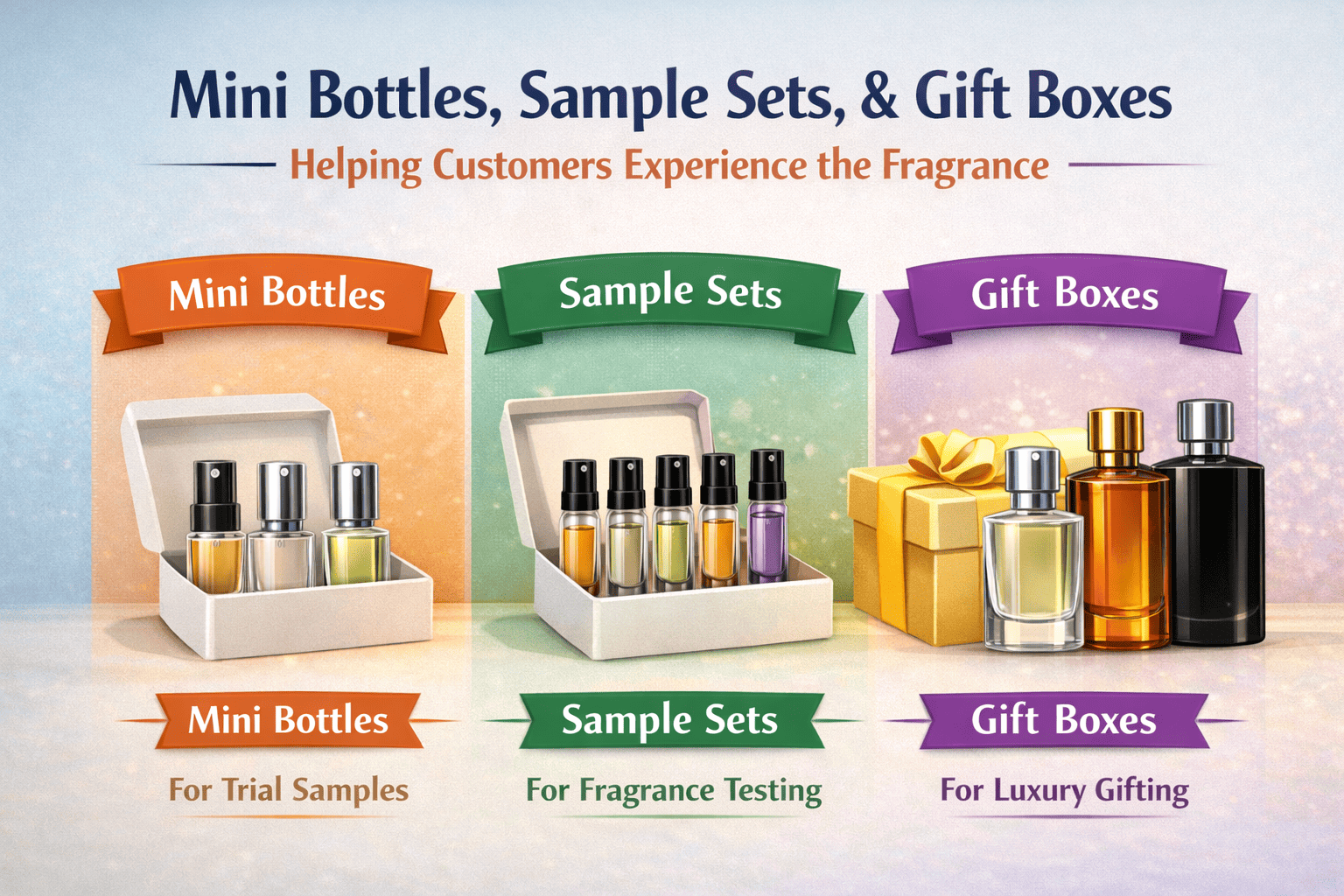
I treat mini bottles, sample sets, and family gift boxes as part of the sales strategy. They help customers smell the fragrance before they commit, and that is very important in perfume.
Why I believe small formats help customers decide
Perfume is different from many other products. A customer cannot fully understand a fragrance by looking at the package. Perfume depends on smell. It depends on real sensory experience. If a buyer is not standing in a physical store and testing the scent in person, it is often hard to know whether the fragrance really fits their taste.
That is why many brands, when promoting a new perfume, will also offer samples, mini bottles, or full [[family gift sets]][family gift sets]. I see this very often in actual orders. When customers customize perfume glass bottles, they often do not order only one single size. They often place grouped orders. For example, they may order 12 pieces of small glass bottles around 3ml each as one set. This makes it easier for the end user to test several scents, compare them, and choose the one they like most.
I think this is one of the smartest ways to reduce the fear of buying fragrance online. A customer may not want to buy a full-size 75ml bottle right away. But the same customer may be very willing to buy a set of small 3ml samples. This gives them a low-risk way to explore the scent collection. It also gives the brand a chance to show more than one fragrance story at the same time.
I also like this approach because it creates more than one selling path. A sample set can be a paid discovery kit. It can be a gift with purchase. It can be a new scent promotion tool. It can also be part of a full family box that helps the brand look more complete and more thoughtful.
How I use small formats in the sales path
| Format | Main Job | Why I Use It |
|---|---|---|
| 3ml mini bottle set | Multi-scent trial | Helps users compare several scents |
| 5ml sample bottle | Discovery and gifting | Lowers first purchase risk |
| 10ml spray bottle | Travel and repeat use | Easy to carry and more practical |
| 10ml roll-on bottle | Controlled daily use | Better dosage control and portability |
| Family gift box | Promotion and storytelling | Shows more of the brand in one set |
Why grouped orders make sense for real brands
I do not think of these small bottles as minor accessories. I think of them as a real part of the product system. When a brand launches a new scent, the goal is not only to sell a big bottle. The goal is to help the customer find the right scent first. So if I can offer a set of 12 small 3ml bottles, I make the decision easier. The user can test, compare, share, and return to the favorite one later. This makes the later full-size purchase much more natural.
I also see strong value in 10ml formats. Besides regular mini spray bottles, many small 10ml roll-on bottles have also become very popular recently. I understand why. They are easy to carry. They are easy to control. They help the user apply a smaller amount without waste. For some customers, especially people who carry perfume in a bag every day, this kind of bottle is very attractive.
So for me, the right size strategy is not just about choosing one main bottle. It is about building a path. I let the customer enter through 3ml, 5ml, or 10ml. Then I let them move to 50ml, 75ml, or 100ml. After that, I can offer 125ml or 200ml to people who already trust the scent. This kind of structure feels practical and much closer to how people really buy perfume.
How Do Practical Use and Travel Habits Affect My Bottle Choice?
I can design a beautiful bottle, but it still needs to fit real life.
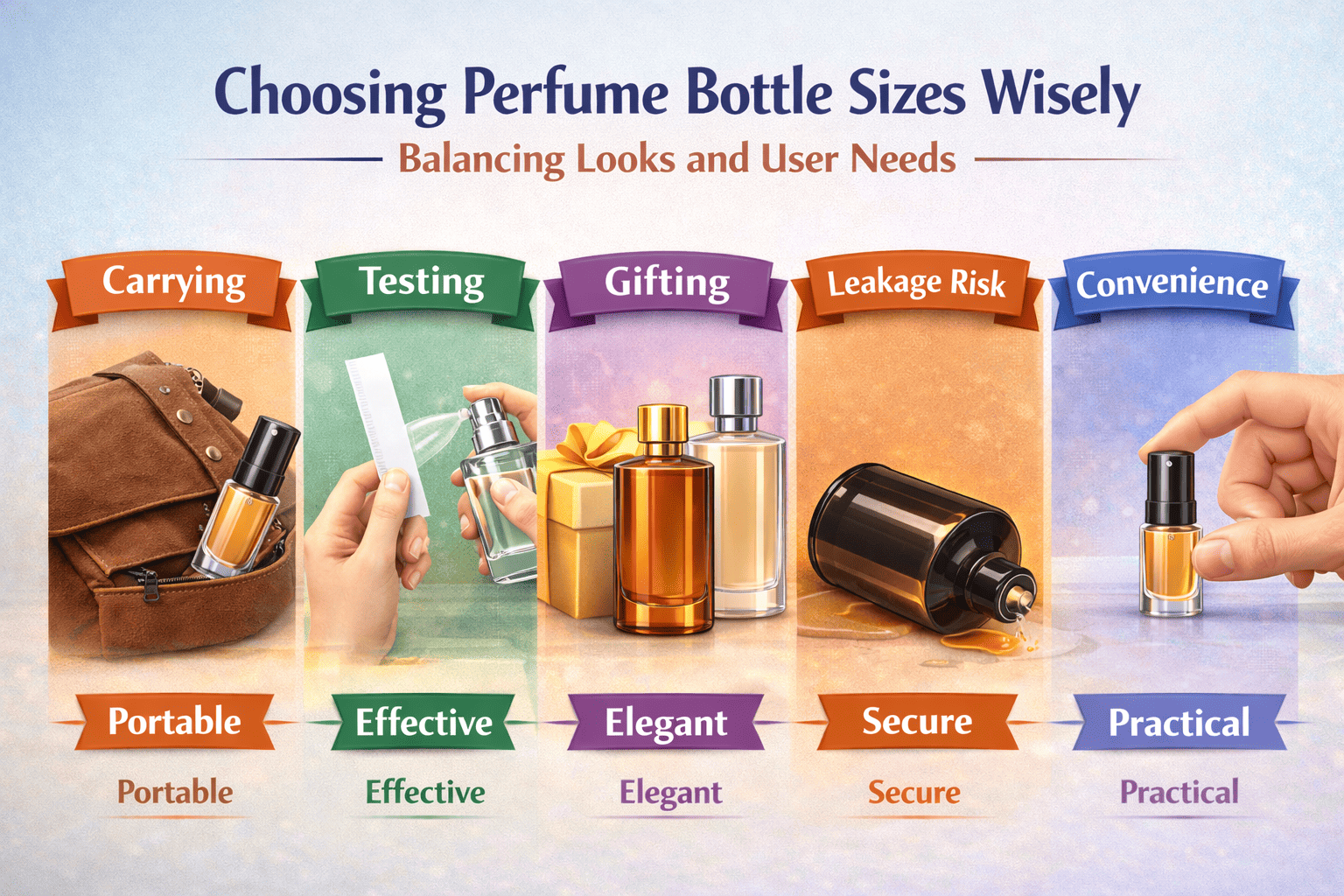
I always think about carrying, testing, gifting, leakage risk, and everyday convenience when I choose perfume bottle sizes. A bottle should not only look good. It should also work well in the user’s routine.
Why portability changes the size decision
Many customers do not use perfume only at home. They use it at work, during travel, on weekends, and during short trips. This changes the way I think about size. A full-size 125ml or 200ml bottle may look great on a shelf, but it is not always easy to carry. A 10ml bottle, on the other hand, fits much more easily into daily life.
This is why I often give small sizes an important role in the line. A 5ml or 10ml bottle is good for trying the scent before buying the full size. It is also good for carrying in a handbag or [[travel pouch]][travel pouch]. A 10ml roll-on bottle adds another advantage. It makes dosage easier to control. Some users do not want a full spray each time. They want a lighter and more precise way to apply fragrance. That is why this format has become more popular.
I also think about packaging risk. The larger the glass bottle, the more I need to think about storage, breakage, and shipping protection. A 200ml bottle can be beautiful and premium, but it asks for stronger packaging planning. A 75ml bottle often feels easier to manage while still giving strong shelf presence. So I do not choose the largest bottle only because it looks generous. I choose it only when the product, market, and customer behavior really support it.
How I match use scene with bottle size
| Use Scene | Size I Usually Prefer | Reason |
|---|---|---|
| Scent testing | 3ml, 5ml | Easy to compare and low risk |
| Daily bag carry | 10ml | Portable and practical |
| Controlled touch-up use | 10ml roll-on | Easy dosage and clean use |
| Core retail sale | 50ml, 60ml, 75ml | Good balance of value and premium feel |
| Strong value purchase | 100ml, 125ml | Better long-term value |
| Statement home bottle | 200ml | Big presence for loyal users |
What this means for the brand owner
For me, the lesson is simple. I should not choose bottle size only by habit. I should choose it by use scene. If I know my customer buys online and cannot smell the fragrance in person, then samples and small grouped sets matter a lot. If I know my customer wants something easy to carry, then 10ml spray and 10ml roll-on formats deserve attention. If I know the scent already has strong repeat demand, then a 125ml or 200ml bottle can become a good value offer.
I also think about visual planning. A 3ml sample bottle supports discovery. A 10ml bottle supports movement. A 75ml bottle often becomes the hero product. A 200ml bottle can become a statement piece in the collection. Each one does a different job. That is why I do not ask one bottle to do everything.
In the end, I believe the best size plan is the one that follows how customers really explore perfume. They smell first. Then they compare. Then they decide. Then they repurchase. If I respect that process, my bottle choices become smarter, and the whole product line becomes easier to sell.
Conclusion
I pick the right perfume bottle size by matching each size to a clear job, from sample testing to full-size loyalty and long-term value.